Every engagement starts with a short discovery call and a written process map. Scope and timeline are agreed in writing before any work begins. No fixed public prices: engagements are scoped after the discovery call.
1. Process mapping & automation roadmap

Before automating anything, we write down how the work actually happens today: who does what, with which tools, how often, and where it breaks. You get a prioritised list of what to automate, what to simplify first, and what to leave alone.
- Typical length: 1–2 weeks
- You get: a process map, a time-cost estimate per step, a ranked roadmap
- Good for: teams that feel busy but can’t say exactly where the hours go
2. Document & email AI assistants
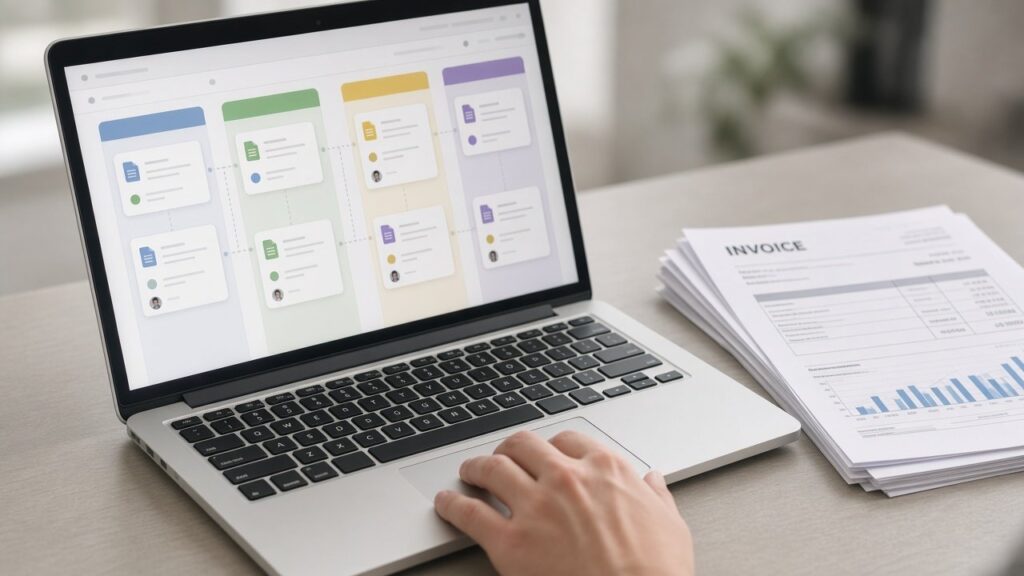
Assistants that read invoices, delivery notes, purchase orders or inbound emails, extract the data, classify the request and prepare the next step: a draft reply, a record in your system, a task for a colleague. Low-confidence cases go to a human queue instead of guessing.
- Typical length: 2–4 weeks
- You get: a working assistant, a review queue, accuracy measurements on your own data
- Good for: admin-heavy teams in logistics, distribution, professional services
3. Customer support assistants
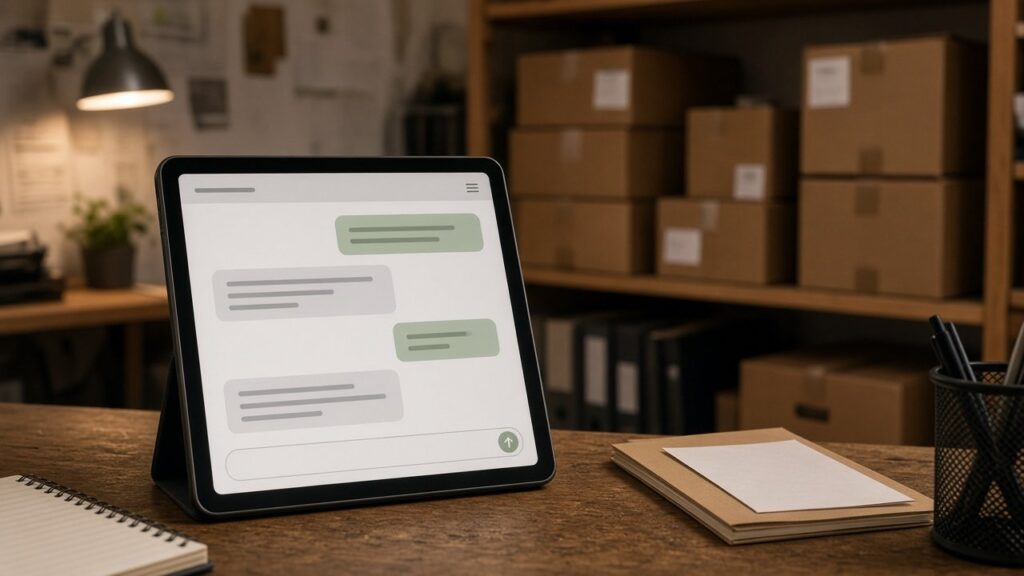
A first-line assistant that answers common questions from your own documentation, looks up order status, and hands over to a person with full context when it can’t help. It is clearly labelled as automated.
- Typical length: 3–5 weeks
- You get: an assistant grounded in your content, escalation rules, a weekly quality report
- Good for: e-commerce and service businesses with repetitive inbound questions
4. Workflow automation

End-to-end workflows across the tools you already use: lead to CRM to follow-up, order to invoice to shipping, booking to reminder to review request. Built in code or in a no-code tool, depending on who will maintain it.
- Typical length: 2–6 weeks
- You get: documented workflows, alerts when something fails, a handover session
- Good for: any team doing the same five clicks fifty times a week
5. Integrations

Clean, documented connections between accounting, e-commerce, CRM, warehouse and productivity tools, using official APIs wherever possible.
- Typical length: 1–4 weeks
- You get: integration code or configuration, error handling, documentation
- Good for: companies whose tools “should talk to each other” but don’t
6. Monitoring & care

Automations need maintenance: APIs change, models get updated, volumes grow. A light monthly arrangement to monitor cost, accuracy and failures, and to fix issues before your team notices.
- Typical length: ongoing, cancel anytime
- You get: monthly report, fixes, model and prompt updates
What I don’t do
- Large enterprise platforms or multi-year transformations.
- Automations that make final decisions about people (hiring, credit, health) without human review.
- Scraping or anything that breaks a platform’s terms of service.